Cosmetic Dentistry
Correct chips, stains, and gaps with thin, custom-crafted porcelain shells designed to look and feel like your own natural teeth.
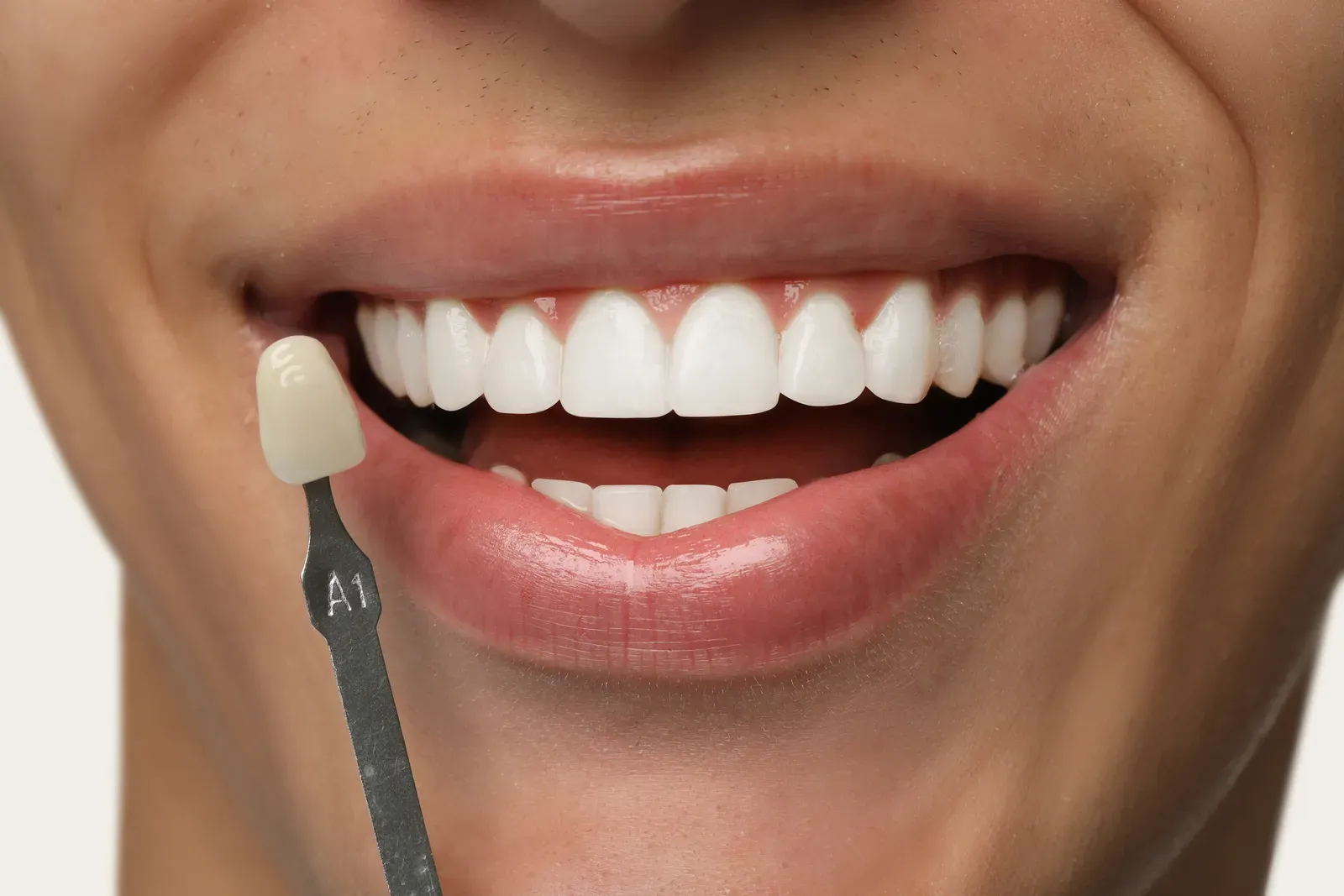
A smile carries a lot of weight in daily life. It shows up in photographs, in conversations, in the moment you decide whether or not to laugh out loud. When teeth are chipped, discolored, worn down, or unevenly spaced, many of our Batavia patients find themselves holding back - covering their mouth, avoiding close-up photos, or simply not smiling as freely as they used to. Porcelain veneers address these concerns directly, offering a durable, natural-looking way to reshape the visible surface of your teeth without altering the healthy structure underneath.
A veneer is a thin shell of dental porcelain, custom-made to bond over the front surface of a tooth. Unlike crowns, which wrap around the entire tooth, veneers conserve far more of your natural enamel while still correcting color, shape, length, and minor alignment issues. The result is a smile that looks like your own teeth, simply refined - brighter, straighter in appearance, and more uniform from one tooth to the next.
Our approach at Batavia Dental starts with listening. We want to understand what bothers you about your smile and what result you are hoping to see before any porcelain is selected or any tooth is prepared. From there, our team combines careful diagnostic planning with artistic shade-matching and precise bonding techniques so that your veneers integrate seamlessly with your bite, your facial structure, and the rest of your teeth.
Veneers are a versatile solution, and the reasons patients pursue them vary widely from one smile to the next. During a consultation, we review your dental history, your bite, and your cosmetic goals to determine whether veneers are the right fit, or whether another treatment might serve you better. The signs below are common starting points for that conversation.
Some of these concerns look purely cosmetic on the surface but can point to underlying bite issues or enamel wear that deserve a closer look. A thorough clinical evaluation helps us confirm that your gums and teeth are healthy enough to support veneers, and that no other dental issue needs attention first.
Most smiles we see combine more than one of the factors below. Understanding where your particular concerns come from helps us plan veneers that address the real cause of the issue, not just its surface appearance.
Coffee, tea, red wine, and dark sauces gradually darken enamel over time. Once stains settle deep into the tooth structure, surface whitening often stops producing noticeable improvement.
Some people are simply born with naturally narrow, short, or gapped teeth. These traits run in families and are not caused by poor hygiene, yet they influence how balanced a smile appears.
Biting into something hard, a sports collision, or a minor fall can chip a front tooth in an instant. Even small chips catch light differently and draw the eye.
Certain antibiotics taken during childhood, along with some long-term medications, can create internal gray or brown banding in the teeth that whitening cannot fully correct.
Grinding gradually flattens the biting edges of front teeth, making them look shorter and less defined. Veneers can rebuild that lost length and natural contour.
Enamel thins gradually with age, allowing the naturally yellow dentin beneath to show through more. This is a normal process, but it changes how bright a smile looks over the years.
Composite bonding placed years ago often stains faster than the surrounding enamel and can wear unevenly, leaving a mismatched smile that veneers can refresh.
Veneers are a collaborative process. We take the time to plan each detail with you, from shade and shape to the fine points of how the light should reflect off your front teeth, so the final result feels like a natural extension of your own smile.
We talk through what you would like to change about your smile, review photos of smiles you admire, and discuss realistic expectations for shape, color, and coverage.
Digital images and a full examination confirm that your teeth and gums are healthy enough to proceed, and we flag any decay or bite issues that should be treated first.
We prepare a minimal, precise amount of enamel, take detailed impressions, and select a porcelain shade that complements your skin tone and surrounding teeth before sending the design to our ceramic lab.
Once your veneers return from the lab, we check their fit, shape, and color against your natural teeth before permanently bonding them in place with precise, gentle technique.
We schedule a short follow-up to confirm your bite feels comfortable and the veneers are settling well, then build continued care into your regular dental checkups.
Veneers do more than mask imperfections for a photo. Done well, they create a lasting, stable improvement that holds up to daily life, conversation, and years of smiling without a second thought.
Porcelain resists staining far better than natural enamel, so the brightness you see on day one stays consistent for years, without the yellowing that whitening alone can leave behind.
Chipped edges, short teeth, and uneven sizes are corrected together, giving your smile a cohesive, proportionate appearance from one tooth to the next.
Small spaces between front teeth can close visually in just two appointments, offering a faster path than months of orthodontic movement for minor cosmetic gaps.
With proper care, well-bonded porcelain veneers can last well over a decade, letting you speak, eat, and smile without constantly thinking about how your teeth look.
One of the most important decisions in veneer planning is how much enamel to remove before bonding. Conservative preparation preserves the strength of your natural tooth, keeping it less sensitive and better supported over the long run. Removing too much structure, by contrast, can weaken a tooth and increase the chance of future complications, which is why precise, minimally invasive technique matters more than speed.
We also take your bite into account before finalizing any design. Veneers that are placed without regard for how your upper and lower teeth meet can chip prematurely or feel uncomfortable when chewing. By checking your bite relationship at every stage, from the initial mock-up through final bonding, we help ensure the restorations function just as well as they look.
Finally, the bonding technique itself has a direct effect on how long veneers last. A clean, dry field and careful adhesive layering create a strong bond between porcelain and tooth, reducing the risk of leakage, staining at the margins, or debonding over time. This attention to detail during placement is often what separates a veneer that looks great for two years from one that still looks great after fifteen.
Veneers are low-maintenance compared to many cosmetic treatments, but a few simple habits go a long way toward protecting your investment and keeping your smile looking its best between visits.
Keep the edges where veneer meets gum clean with gentle, non-abrasive toothpaste to prevent staining along the margins.
A custom nightguard absorbs clenching forces and protects porcelain edges from chipping during sleep.
Skip habits like chewing ice, pens, or fingernails, which can chip porcelain just as easily as natural enamel.
Porcelain resists stains well, but rinsing with water after coffee, tea, or wine keeps your whole smile looking even.
Regular hygiene visits let us check the bonding margins and polish away any surface buildup before it becomes a concern.
Let us know if a veneer ever feels loose, sharp, or sensitive so we can address it quickly, before a small issue grows.
These habits support the lifespan of your veneers, but they are not a substitute for professional monitoring. Routine checkups remain the best way to catch small issues early and keep your smile performing well for years.
"Patients often tell us they wish they had done this years sooner. Our goal is a smile that looks natural in person and in photographs, and one you genuinely forget is 'done' because it simply feels like your own."
Answers to the questions we hear most often from Batavia patients considering porcelain veneers.
Batavia Dental
Friendly, modern care for every member of your family - schedule your visit with Batavia Dental today.


 (630) 872-5369
