Restorative Dentistry
Comfortable, natural-looking tooth replacement options custom-fitted to restore your smile, your bite, and your confidence.
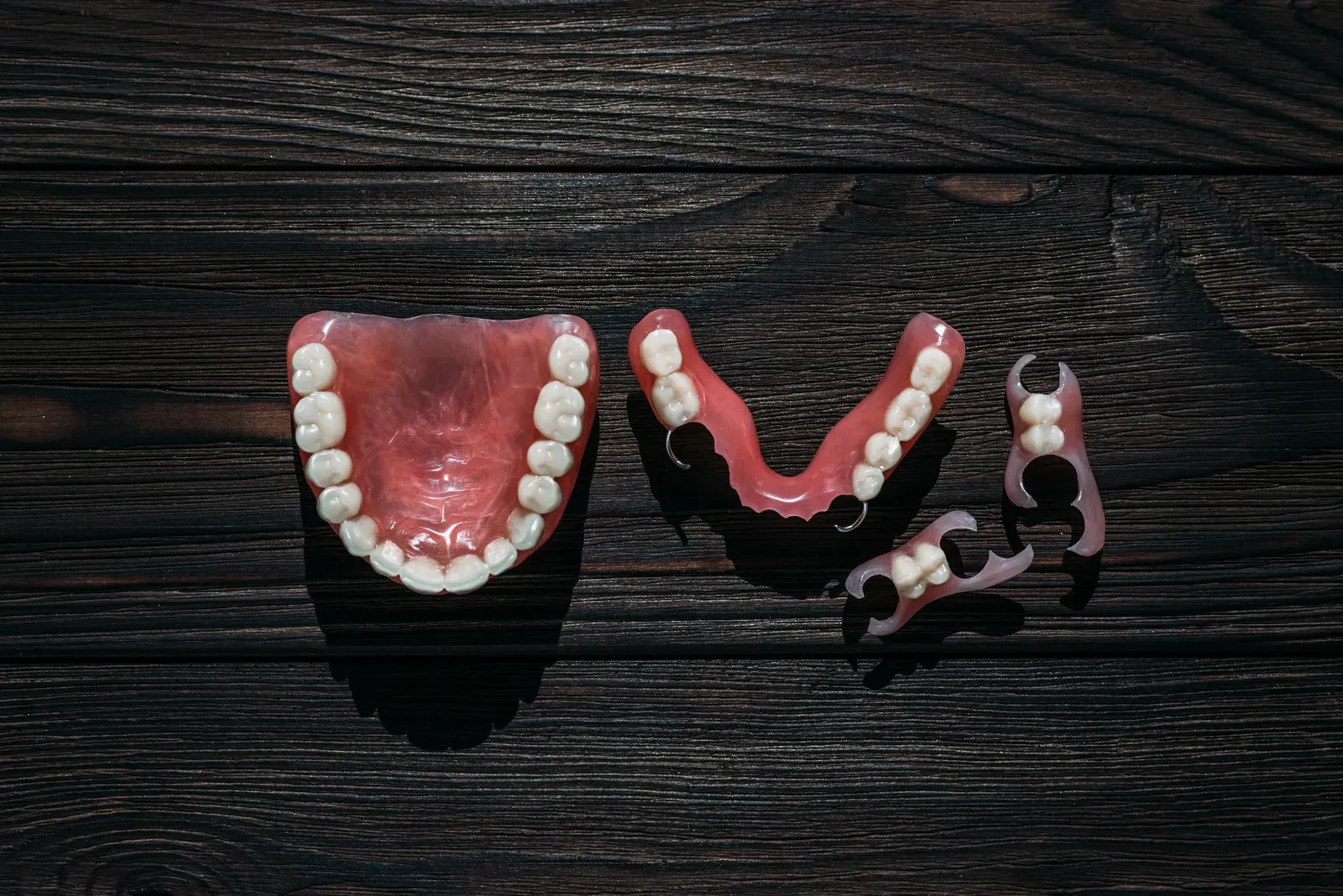
Losing one tooth or several changes more than your smile. It affects how you chew your food, how clearly you speak, and how your facial muscles hold their shape over time. When teeth are missing, the surrounding teeth can shift, the jawbone that once supported them begins to resorb, and everyday tasks like eating a meal with friends or laughing without covering your mouth start to feel like a chore instead of a pleasure. At Batavia Dental, we see this every week, and we know it is about far more than cosmetics.
Dentures and partials remain one of the most dependable, affordable, and well-proven ways to replace missing teeth. A complete denture replaces an entire arch of teeth, while a removable partial denture fills the gaps left by several missing teeth while using your remaining healthy teeth for support. Both are custom-fabricated to match your bite, your facial proportions, and the natural shade and shape of your remaining teeth, so the result looks like you, not like a generic smile.
Our approach starts with a thorough evaluation of your oral health, bone structure, and remaining teeth before we ever discuss materials or design. We want your new teeth to feel stable when you chew, stay comfortable against your gums, and hold up to daily wear for years, not just look good in the mirror on the day you walk out of our office.
Tooth loss does not always happen all at once, and many patients adjust to the changes gradually without realizing how much their daily comfort and confidence have been affected. The signs below are common reasons patients in Batavia come in for an evaluation.
If any of this sounds familiar, waiting rarely improves the situation. Bone loss and bite changes tend to progress the longer teeth remain missing, which can make future treatment more complex. A professional evaluation lets us catch these changes early and recommend the option that fits your mouth and your life.
Tooth loss is rarely the result of a single event. More often, a combination of conditions builds up over years before teeth finally fail. Understanding the cause helps us plan a replacement that also protects your remaining oral health.
Periodontal disease destroys the bone and ligament that anchor teeth in place, and once that support is gone, even healthy-looking teeth can become loose and eventually require removal.
Deep cavities that reach the nerve or extend below the gum line can make a tooth too structurally compromised to save, leaving extraction and replacement as the practical path forward.
A sports injury, fall, or automobile accident can fracture or dislodge teeth instantly, sometimes affecting several teeth in the same area at once.
Decades of chewing, grinding, and prior dental work wear teeth down and weaken fillings and crowns, which can eventually lead to fracture or failure.
Some patients are simply born with weaker enamel, crowded arches, or missing permanent teeth, all of which increase the likelihood of needing a prosthetic replacement later in life.
Smoking restricts blood flow to the gums and slows healing, accelerating bone and tissue loss that weakens the foundation teeth depend on.
Conditions like uncontrolled diabetes or osteoporosis can affect bone density and the body's ability to fight infection, putting teeth at greater long-term risk.
Every mouth is different, so every denture or partial we design follows a careful, individualized process rather than a one-size-fits-all mold. Here is what you can expect when you work with our team.
We start by listening. You tell us about your chewing difficulties, prior dental history, and what you want your new smile to look and feel like, and we answer every question honestly.
Digital X-rays and a full oral exam let us assess your remaining teeth, gum health, and bone structure so we can recommend full dentures, partials, or a combination approach.
We walk you through material options, estimated timeline, and cost, including any preparatory steps like extractions, so there are no surprises once treatment begins.
We take detailed impressions and bite measurements, then work with a trusted dental lab to custom-craft your denture or partial for an accurate, comfortable fit and natural shading.
Once your appliance is ready, we check fit and bite alignment carefully, make any needed adjustments, and schedule follow-up visits to keep your new teeth comfortable as your mouth adapts.
A properly designed and well-fitted appliance does more than fill a gap. It restores function and stability that affects nearly every part of your daily routine.
You can return to a wider range of foods, from fresh fruit to firmer meats, without the hesitation or discomfort that comes with missing or unstable teeth.
Replacing missing teeth restores the structure your tongue and lips rely on to form sounds correctly, reducing whistling, slurring, or mumbled words.
A properly built denture fills out your cheeks and lips naturally, helping prevent the sunken, aged appearance that often follows significant tooth loss.
Custom shading and tooth shape are matched to look natural, so you can laugh, speak, and smile freely in social and professional settings again.
A partial denture holds remaining teeth in their proper positions, preventing the drifting and bite shifting that often leads to further tooth loss.
Dentures and partials remain one of the most cost-effective ways to replace multiple missing teeth, with decades of clinical refinement behind the materials and techniques we use.
Once teeth are removed, the jawbone that used to support them begins to remodel and gradually shrink, a process dentists call ridge resorption. This is why a denture that fits perfectly the day it is delivered may start to feel loose a year or two later; the bone beneath it has changed shape even though the appliance has not. This is also why we never treat denture fitting as a one-time event. We build in follow-up visits specifically to monitor these changes and recommend relines or adjustments before loose dentures cause sore spots, difficulty chewing, or embarrassing slippage.
For partial denture wearers, the biomechanics are a bit different but equally important. A well-designed partial distributes chewing forces across your remaining natural teeth and the surrounding gum tissue using precision clasps and connectors. If a partial is poorly fitted or the design does not account for your specific bite pattern, it can place uneven stress on your remaining teeth, accelerating wear or even loosening teeth that were previously healthy. This is exactly why we take detailed impressions and carefully map your bite before fabrication begins, rather than relying on generic measurements.
Getting the fit right from the start, and keeping it right through periodic adjustments, is what separates a denture that genuinely improves your quality of life from one that sits in a drawer because it never felt comfortable. That long-term relationship with your dental team matters just as much as the appliance itself.
Good daily habits extend the life of your appliance and protect the health of your remaining teeth and gums. A few simple routines make a meaningful difference.
Brush your denture or partial every day with a soft brush and a non-abrasive cleanser to remove plaque and food debris before it hardens into stubborn buildup.
Most removable appliances need moisture to hold their shape, so soak them in water or a denture-specific solution overnight rather than letting them dry out.
Clean over a folded towel or a sink full of water, since even a short drop onto a hard counter can crack or warp the appliance.
If you wear a partial, continue brushing and flossing your natural teeth thoroughly, since decay or gum disease there can compromise the fit of the entire appliance.
Bleach, whitening toothpaste, and very hot water can discolor or warp denture materials, so stick to products designed specifically for removable appliances.
Scheduled visits let us catch early signs of looseness, sore spots, or gum changes before they become bigger problems that affect fit or comfort.
These habits go a long way toward keeping your appliance comfortable and durable, but they are not a substitute for professional evaluation. If something feels off, a quick visit to our office is always the right next step.
"We never rush a denture fitting. Every adjustment we make is about getting your bite, your comfort, and your confidence right, not just handing over an appliance and moving on."
Answers to common questions our Batavia patients ask about dentures and partial dentures.
Most patients need two to four weeks to adjust to speaking and eating with a new denture or partial. Your tongue, cheeks, and jaw muscles need time to learn the new positioning, and mild soreness in the first week or two is common. We schedule follow-up adjustment visits during this period so we can smooth any pressure points and help the transition go as comfortably as possible.
A full denture replaces an entire arch of teeth, upper or lower, when no natural teeth remain. A partial denture, on the other hand, fills the gaps left by several missing teeth while clasping onto your remaining healthy teeth for stability. We will recommend the option that fits your specific situation after evaluating which of your teeth, if any, are healthy enough to keep.
Yes. We custom-select tooth shade, size, and shape to complement your facial features and, where possible, match your remaining natural teeth. Modern denture materials are designed to mimic the translucency and texture of real enamel, so the result looks far more natural than older generations of dentures.
Most dentures need a reline every two to four years as your gum and bone structure gradually changes shape, and a full replacement is typically recommended every five to eight years. Regular check-ups help us catch fit changes early, before they cause discomfort or affect how well the denture functions.
Once you adjust, most patients can eat a wide variety of foods comfortably. We generally recommend starting with softer foods cut into smaller pieces during the first couple of weeks, then gradually reintroducing firmer and crunchier items as your confidence and chewing efficiency improve.
It depends on your oral health, bone density, budget, and personal preference. Dentures and partials are removable, more affordable upfront, and do not require surgery, while implants are fixed in place and often preserve bone more effectively. During your consultation, we will discuss both options honestly so you can choose what fits your needs best.
Many dental insurance plans provide partial coverage for dentures and partials under major restorative benefits. Coverage amounts vary by plan, so our team will help verify your benefits and walk you through available financing options before treatment begins.
Batavia Dental
Friendly, modern care for every member of your family - schedule your visit with Batavia Dental today.


 (630) 872-5369
