Restorative Dentistry
Comfortable, precise endodontic care that stops tooth pain at its source and preserves your natural smile for years to come.
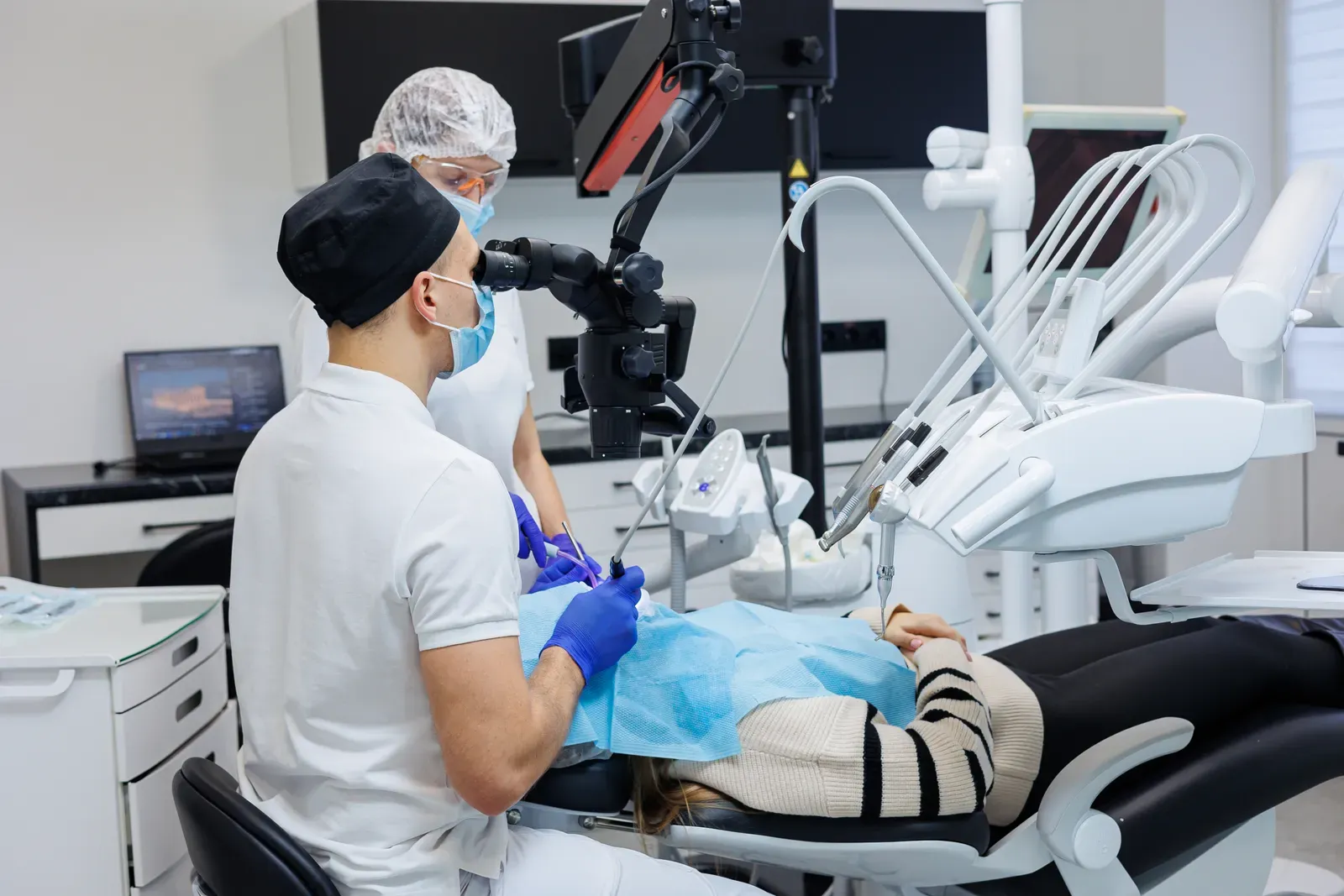
Inside every tooth, beneath the hard enamel and dentin, sits a soft core called the pulp - a bundle of nerves and blood vessels that keeps the tooth alive during its developing years. When deep decay, a cracked tooth, repeated dental work, or an injury allows bacteria to reach that pulp, the tissue becomes inflamed and infected. Left alone, the infection has nowhere to go but down through the root, often forming an abscess at the tip of the root and placing the surrounding bone at risk.
The pain that comes with this kind of infection rarely stays quiet. Patients describe a throbbing ache that worsens when lying down, sharp sensitivity to hot or cold that lingers long after the stimulus is gone, and tenderness that makes chewing on one side of the mouth nearly impossible. Sleep suffers, eating becomes a chore, and the discomfort can radiate into the jaw, ear, or temple, making it hard to pinpoint exactly which tooth is the problem.
At Batavia Dental, root canal therapy is approached as a tooth-saving procedure, not a last resort to dread. Our team removes the infected pulp tissue, thoroughly cleans and disinfects the inner canal system, and seals the space to prevent reinfection, all while keeping your comfort the top priority at every step. Our diagnostic process uses digital imaging to map the exact shape of your root canals so treatment is precise, efficient, and tailored to your specific tooth anatomy.
Pulp infections do not always announce themselves the same way in every patient. Some people experience intense, unmistakable pain, while others notice only subtle changes until the problem has progressed. Knowing the common warning signs helps you seek care before the infection spreads or the tooth becomes unsalvageable.
Because some of these symptoms overlap with other dental issues, a professional evaluation with an exam and digital X-ray is the only reliable way to confirm whether root canal therapy is needed. Catching the infection early typically means a simpler procedure and a better long-term outcome for the tooth.
Root canal infections rarely happen overnight. They are usually the result of one or more contributing factors that allow bacteria to reach the inner pulp chamber over time, whether through gradual decay or a sudden injury.
Cavities that progress past the enamel and dentin eventually reach the pulp chamber. Once bacteria enter this inner space, the tissue becomes inflamed and infected, and the damage cannot heal on its own.
Chewing on hard foods, grinding at night, or a direct blow to the mouth can create cracks that expose the pulp to oral bacteria, even when the fracture line is too small to see easily.
Teeth that have undergone multiple fillings, crowns, or other restorative work over the years are more vulnerable to pulp irritation and eventual infection from cumulative trauma.
A sports injury, fall, or accident can damage the pulp even without visible cracking, sometimes causing symptoms to appear weeks or months after the original impact.
Older or oversized fillings can leak at the margins over time, allowing bacteria to seep in underneath and reach the pulp without any obvious outward sign of trouble.
Severe periodontal infections can travel down along the root surface and reach the pulp from below, creating what is known as a combined periodontal-endodontic infection.
Putting off a dental visit when a tooth starts aching gives bacteria more time to multiply, increasing the likelihood that a simple filling is no longer enough to resolve the problem.
Every root canal we perform is customized to the tooth, the extent of the infection, and your comfort preferences. Here is what you can expect from the moment you walk through our door to the day your tooth is fully restored.
We start by listening to your symptoms, reviewing your dental history, and discussing exactly when and how the pain began. This gives us a clear starting point before any imaging or examination takes place.
Digital X-rays let us see the exact extent of infection, the shape of the root canals, and whether any surrounding bone has been affected. Temperature and bite testing confirm which tooth is actually the source of pain.
We walk you through what the procedure involves, how many visits it will likely take, and what restoration - such as a crown - will protect the tooth afterward. Your questions are answered before any work begins.
Under local anesthesia, we remove the infected pulp, clean and shape the canal system, and seal it with a biocompatible filling material. Most patients are surprised at how comfortable the appointment feels compared to what they expected.
We schedule a follow-up to place a permanent crown or filling and check your healing progress. Our team remains available if you have any questions or concerns in the days following treatment.
Root canal therapy is designed to resolve infection permanently, not simply mask the pain temporarily. Patients who complete treatment typically notice a range of lasting improvements in both comfort and function.
Removing the infected pulp eliminates the source of the throbbing, persistent pain that often prompted the visit in the first place, bringing noticeable relief within days.
Keeping your own tooth maintains normal chewing function and bone structure in a way that an extraction and replacement simply cannot fully replicate.
Clearing the infected tissue prevents the bacteria from spreading to surrounding bone, neighboring teeth, or deeper into the jaw and facial tissues.
Once the tooth is restored with a crown or filling, you can bite and chew normally again without the sharp pain that previously made certain foods off-limits.
With the infection resolved, the nighttime throbbing and sensitivity that disrupted sleep and concentration during the day typically disappear entirely.
A properly restored tooth looks and functions like any other, so you can smile, laugh, and speak without worrying about visible damage or discoloration.
When pulp tissue becomes infected, the bacteria inside the tooth do not stay contained. They continue to multiply within the narrow canal spaces, producing toxins that irritate the surrounding bone and can eventually form a visible abscess. The longer this process continues, the more bone loss can occur around the root tip, which sometimes complicates treatment and extends healing time.
Pain that temporarily subsides is often misread as a sign of improvement, when in reality it can mean the nerve tissue has died and stopped sending pain signals altogether. The infection, however, is still active and continues to affect the surrounding tissue even without the warning sign of discomfort. This is one of the main reasons dentists stress the importance of a full evaluation rather than waiting to see if symptoms resolve on their own.
Catching an infection early generally means a more straightforward procedure, a shorter treatment timeline, and a stronger long-term outcome for the tooth. Our team uses digital imaging specifically to assess bone health around the root, so we can give you an honest, accurate picture of what your tooth needs before any irreversible step is taken.
While only professional treatment can resolve an infected tooth, a few simple habits can help protect your recovery and support your long-term oral health after treatment is complete.
Until a permanent crown or filling is placed, chew on the opposite side of your mouth to protect the temporary restoration from cracking or dislodging.
Continue your regular oral hygiene routine around the area, being gentle near any tenderness, to prevent new decay or gum irritation from developing.
Mild soreness after treatment is normal and usually responds well to over-the-counter pain relievers taken exactly as our team recommends.
A treated tooth needs a crown or permanent filling soon after the root canal to prevent fracture and reinfection, so do not delay this follow-up visit.
If you grind or clench your teeth at night, ask our team about a custom nightguard to protect your treated tooth and the rest of your smile from excess force.
Routine exams let us monitor the treated tooth over time and catch any new issues in neighboring teeth before they progress.
These habits support healing and help protect your investment in the treatment, but they are not a substitute for professional care. Any new pain, swelling, or sensitivity after a root canal should be evaluated promptly by our team.
"We know that root canal therapy carries a reputation that doesn't match what it actually feels like in modern practice. Our goal is to get you comfortable, address the infection, and get you back to your normal routine without unnecessary delay."
Answers to the questions we hear most often from patients considering root canal therapy at Batavia Dental.
Batavia Dental
Friendly, modern care for every member of your family - schedule your visit with Batavia Dental today.


 (630) 872-5369
