General Dentistry
A quick, painless exam built into your routine visit that looks for early warning signs long before you'd notice them yourself.
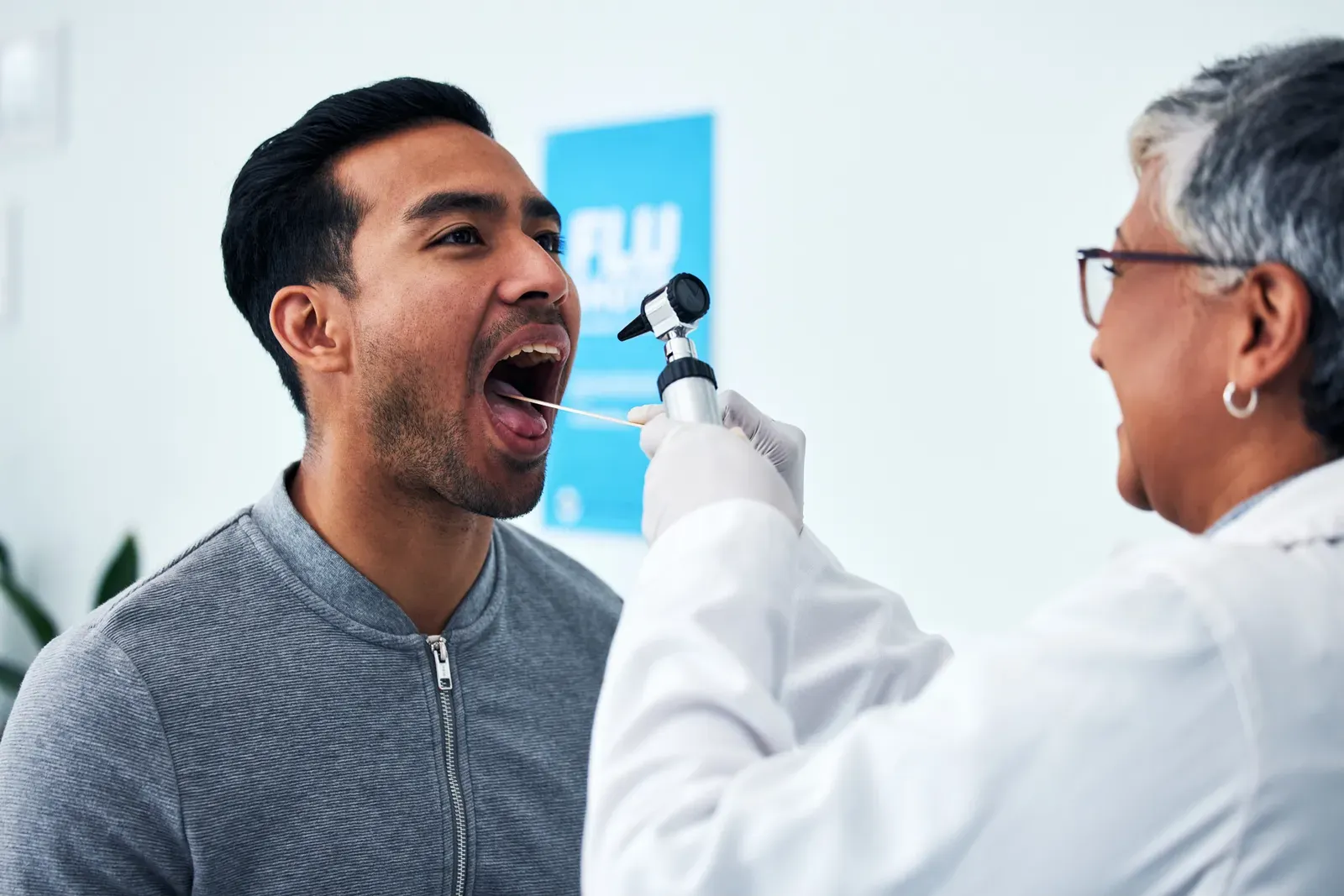
Your mouth is lined with soft tissue that can develop abnormal changes long before any pain or visible symptom shows up. Oral cancer often begins as a patch, sore, or lump so small and painless that it goes unnoticed by the person it's affecting. That's exactly why a trained set of eyes needs to look at your cheeks, tongue, gums, lips, and throat on a regular basis, not just when something feels wrong.
At Batavia Dental, oral cancer screening is a standard part of general dentistry care, built into your routine checkup rather than treated as a separate, intimidating appointment. We examine the tissue inside and around your mouth, feel for irregularities along your jaw and neck, and note anything that warrants a closer look or a referral for further testing. For most patients, the exam takes just a few minutes and causes zero discomfort.
We believe prevention works best when it's consistent. Oral cancer is far more treatable when it's caught early, and survival rates drop significantly the longer a growth goes undetected. Our approach combines a careful visual exam, gentle palpation, and an honest conversation about your personal risk factors, so you leave every visit with real clarity about your oral health, not just a clean bill on your teeth.
Oral cancer doesn't look the same in every patient, and early-stage changes are frequently mistaken for a canker sore, a bite mark, or simple irritation. If you notice any of the following, it's worth having it checked rather than waiting to see if it resolves on its own.
None of these signs automatically mean cancer, and most turn out to be benign. But the only way to know for certain is a proper clinical evaluation. Catching an issue early, while it's still localized, typically means simpler treatment and far better long-term outcomes.
Oral cancer risk is rarely caused by a single factor. More often, it's a combination of lifestyle habits, exposures, and personal health history that raises your odds over time. Knowing where you stand helps us tailor how often and how closely we screen you.
Cigarettes, cigars, pipes, and smokeless tobacco all expose oral tissue to carcinogens. This remains the single largest risk factor for oral cancer among patients we see.
Frequent, heavy alcohol use irritates the delicate lining of the mouth and throat. Combined with tobacco use, the two together multiply risk well beyond either habit alone.
Certain strains of human papillomavirus are increasingly linked to oropharyngeal cancers, including in patients with no history of tobacco or heavy drinking.
Years of unprotected sun exposure can lead to lip cancer, particularly on the lower lip. A lip balm with SPF offers real, practical protection.
Risk rises steadily after age 40, which is one reason routine screening becomes increasingly important as part of your regular dental visits as you get older.
Diets low in fruits and vegetables have been associated with higher oral cancer rates, likely due to reduced antioxidant intake that normally helps protect cells.
A personal history of oral cancer or a family history of head and neck cancers puts patients in a higher-risk category that calls for closer monitoring.
Patients with a compromised immune system, whether from medication or an underlying condition, have a reduced capacity to repair damaged tissue, raising vulnerability.
We've built our screening process to be quick, unobtrusive, and easy to understand, so you always know what we're checking and why.
We start by talking with you about any new symptoms, tobacco or alcohol use, family history, and overall health changes since your last visit. This context shapes how closely we examine specific areas.
Using a bright light and mirror, we carefully inspect your lips, cheeks, gums, tongue, floor of the mouth, and the back of your throat for discoloration, sores, or texture changes.
We gently feel along your jaw, neck, and lymph nodes for lumps, swelling, or areas of firmness that wouldn't be visible to the eye alone.
We record our findings in your chart so that at future visits, we can compare tissue appearance and catch subtle changes that develop gradually between checkups.
If we find anything that warrants further investigation, we'll explain exactly what we saw, discuss next steps, and coordinate a referral to an oral surgeon or specialist for biopsy or further diagnostics.
A screening doesn't just check a box on your visit. It gives you real, actionable information about your health and genuine peace of mind between appointments.
Lesions identified at an early stage are frequently treated with far less invasive procedures than cancers discovered after they've spread to lymph nodes or deeper tissue.
Oral cancers caught in their earliest stage have dramatically better five-year survival rates compared to those found later, making timing one of the most important factors in outcomes.
Because screening is built into your regular cleaning and exam, you get this protection without adding another trip to your calendar or any extra discomfort to your visit.
Consistent visits let us track your tissue over months and years, so we're able to flag even subtle changes that would be easy to miss if we were only seeing you once.
If we see something that needs a closer look, we'll walk you through exactly what it is, what it likely means, and what the next step should be, in plain language.
Knowing your mouth has been professionally checked provides genuine reassurance, especially for patients who have risk factors like tobacco use or a family history of cancer.
Unlike many other cancers, oral cancer develops in an area most people rarely look at closely. The back of the tongue, the floor of the mouth, and the soft palate are not places you inspect in a mirror each morning, which means early lesions can grow quietly for months before anyone notices. Early-stage lesions are also often painless, so there's no built-in warning signal telling a patient to seek care.
This is compounded by the fact that early changes can resemble common, harmless conditions: a canker sore, a spot from biting your cheek, or simple irritation from a denture. Without training in what distinguishes a benign irritation from a concerning lesion, it's entirely reasonable for a patient to wait and see rather than seek evaluation, and that delay is exactly what allows more advanced cases to develop.
A trained clinical eye looks for specific characteristics: irregular borders, persistent duration beyond two weeks, resistance to healing, and texture changes that casual observation would miss. By combining a visual exam with physical palpation of the neck and jaw, we're able to catch indicators in places patients would never think to check on their own, which is the entire reason this exam exists as a dedicated part of your visit rather than something left to chance.
While professional screening is essential, a few everyday habits can lower your risk and help you notice changes sooner.
Use a bright light and mirror once a month to look at your lips, gums, and tongue. Note anything new and mention it at your next visit, or call sooner if it concerns you.
Cutting back on or quitting tobacco and reducing heavy alcohol use is the single most effective lifestyle change you can make to lower your personal risk.
Apply a lip balm with SPF before spending time outdoors, especially during Illinois summers, to guard against cumulative sun damage.
Fruits and vegetables rich in antioxidants support healthy tissue repair and have been linked to lower rates of oral cancer in long-term studies.
Twice-yearly visits ensure screening happens on a predictable schedule, rather than relying on symptoms to prompt a visit after a problem has already developed.
Talk with your physician about HPV vaccination guidance for yourself or your children, since HPV is an increasingly recognized contributor to oropharyngeal cancer.
These habits meaningfully support your oral health, but they don't replace a clinical exam. Many early changes simply can't be identified through self-checks alone, which is why professional screening remains the most reliable safeguard.
"We tell every patient the same thing: this exam takes a few minutes, it's never painful, and it's one of the most important things we do for you all year. Catching something early can change everything."
Answers to the questions we hear most often about oral cancer screening at Batavia Dental.
Batavia Dental
Friendly, modern care for every member of your family - schedule your visit with Batavia Dental today.


 (630) 872-5369
