Restorative Dentistry
Replace missing teeth with a permanent solution that looks, feels, and functions like your own, built on decades of restorative dentistry experience.
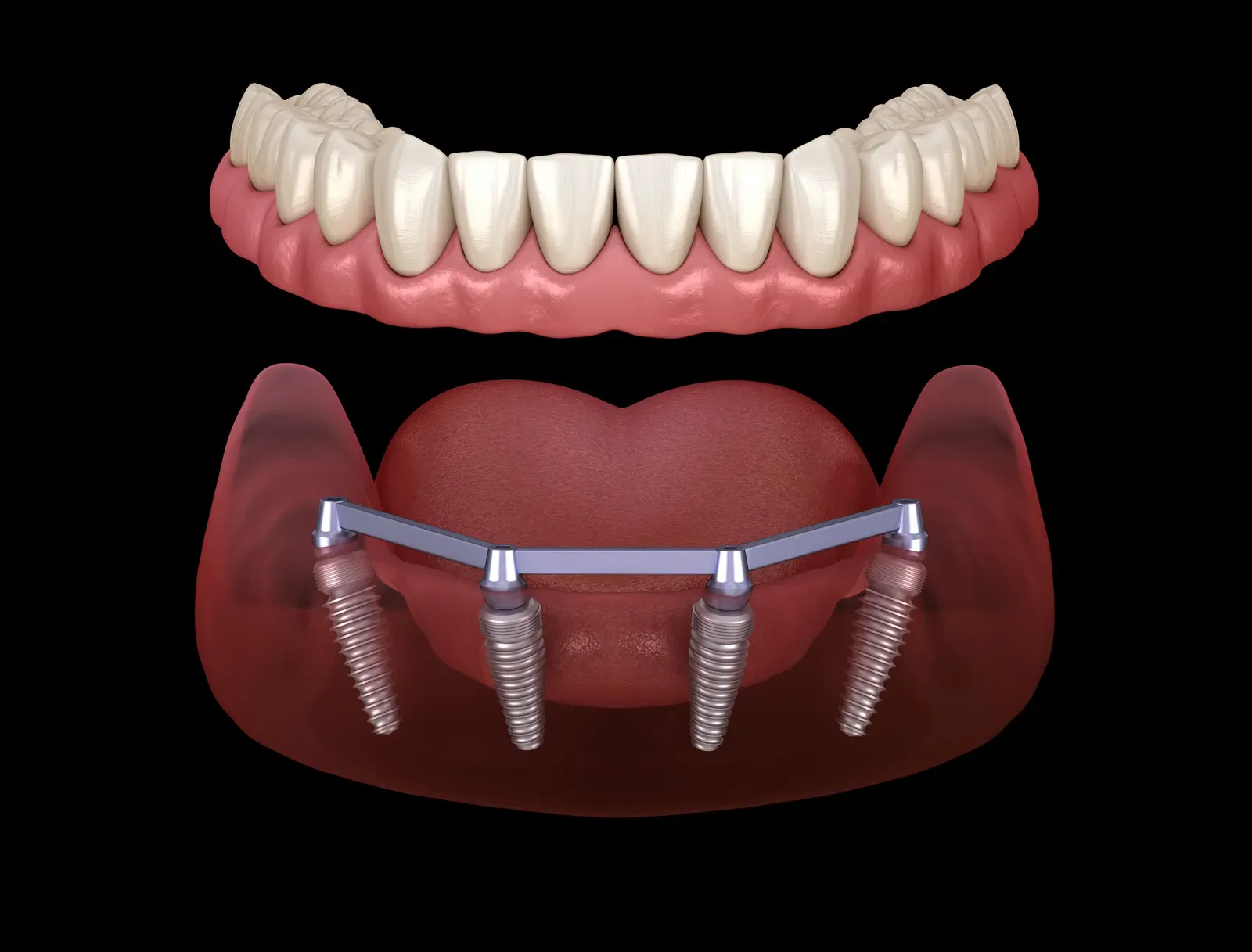
Losing a tooth changes more than your smile. The space left behind can shift neighboring teeth out of position, weaken your bite, and over time, lead to bone loss in the jaw where the tooth root once stood. Many patients adapt without realizing how much a missing tooth is affecting their chewing, their speech, or the way they feel about smiling in photos.
A dental implant addresses the problem at its source. Rather than simply covering the gap, a titanium implant post is placed directly into the jawbone, where it fuses with the bone over several months through a process called osseointegration. Once integrated, it functions as a true replacement root, supporting a custom-crafted crown, bridge, or denture that looks and performs like natural teeth.
As part of our restorative dentistry services, our team at Batavia Dental approaches implant care with careful diagnostic planning. We evaluate your bone density, gum health, and bite alignment before recommending a plan, so the result is stable, comfortable, and built to last for many years of normal use.
Tooth loss affects people differently depending on which tooth is missing, how long the space has been open, and the condition of the surrounding bone and gums. The following signs suggest it may be time to discuss implants with our team.
Not every situation calls for the same approach, which is why a thorough clinical evaluation matters before any treatment begins. Waiting too long after tooth loss can allow bone resorption to progress, sometimes requiring additional grafting procedures that could have been avoided with earlier care.
Understanding why a tooth was lost helps us plan an implant that addresses the underlying issue, not just the visible gap. Several factors commonly contribute, and they often overlap.
Deep cavities that reach the tooth's nerve or structure can make a tooth unsalvageable, even with a root canal or crown.
Periodontal disease breaks down the bone and ligament supporting a tooth, eventually causing it to loosen and fall out.
A sports injury, fall, or accident can fracture or knock out a tooth beyond the point of repair or reattachment.
Years of untreated bruxism place excessive force on teeth, leading to cracks, fractures, and premature wear.
Once supporting bone deteriorates significantly, even a structurally intact tooth may no longer be stable enough to save.
An old filling, crown, or root canal that eventually fails can leave a tooth too compromised to restore again.
Conditions like diabetes or osteoporosis can accelerate oral bone and tissue breakdown, increasing the risk of tooth loss.
Implant treatment unfolds in careful stages, with time built in for healing between each phase. Here is what you can expect from your first visit through your final restoration.
We talk through your dental history, your goals, and any concerns about the procedure so we can design a plan around your comfort and your schedule.
Digital x-rays and a 3D scan of your jaw allow us to measure bone density and map out the precise placement position for the implant post.
We outline every stage of your treatment, including whether bone grafting is needed, the type of restoration best suited to your bite, and a realistic timeline.
The implant post is placed under local anesthesia, followed by a healing period of several months while it fuses securely with your jawbone.
Once healing is confirmed, we attach a custom crown, bridge, or denture, and schedule follow-up visits to confirm proper fit, bite, and long-term comfort.
A well-placed implant does more than fill a gap. It restores function and stability that other tooth replacement options simply cannot match over the long run.
Because the implant fuses with your jawbone, it withstands normal biting forces without shifting, letting you eat the foods you enjoy with confidence.
The implant post stimulates the bone the same way a natural root would, helping to prevent the gradual bone loss that follows untreated tooth loss.
Unlike a traditional bridge, an implant does not require grinding down adjacent healthy teeth, keeping your remaining natural structure intact.
The final crown is shaded and shaped to match your surrounding teeth, so most people cannot tell it is a restoration at all.
A stable implant eliminates the slipping or whistling that can come with ill-fitting dentures, supporting natural speech patterns.
With proper home care and regular checkups, a dental implant is built to serve you reliably for decades, often a lifetime.
The long-term success of a dental implant depends almost entirely on the quality and quantity of bone available to support it. When a tooth is lost, the jawbone that once surrounded its root no longer receives the stimulation it needs, and it begins to resorb, often losing a measurable percentage of its width within the first year alone.
This is why timing matters. Patients who pursue implant treatment soon after tooth loss typically have more bone available, which can mean a more straightforward placement procedure. Those who wait years may need a bone grafting procedure first, adding time to the overall treatment but still achieving a stable, lasting result once the graft has integrated.
Our diagnostic imaging allows us to measure bone volume precisely before recommending a plan, so we can tell you up front whether grafting is likely to be necessary. This kind of thorough planning is what allows implants to achieve success rates that consistently outperform other tooth replacement methods over the long term.
An implant does not decay the way a natural tooth can, but the gum and bone tissue around it still need consistent care to stay healthy for the long term.
Clean around the implant crown and gumline with a soft-bristle brush just as you would your natural teeth.
Removing plaque between the implant and neighboring teeth helps prevent gum inflammation around the restoration.
Ice, hard candy, and pen caps can chip or crack the crown even though the implant post itself is strong.
We monitor the implant, your bite, and surrounding gum tissue at regular visits to catch any issues early.
A hygienist can clean areas around the implant that are difficult to reach with a toothbrush or floss alone.
If you grind your teeth at night, a custom nightguard can protect both your implant and your remaining natural teeth.
These habits go a long way toward protecting your investment, but they work alongside our care, not in place of it. Regular professional monitoring remains the best way to catch small issues before they become bigger problems.
"We walk every patient through exactly what to expect before we place a single implant. There should never be any guesswork about your own treatment, your timeline, or your results."
Answers to the questions we hear most often from patients considering dental implants at Batavia Dental.
Batavia Dental
Friendly, modern care for every member of your family - schedule your visit with Batavia Dental today.


 (630) 872-5369
