Cosmetic Dentistry
Straighten your teeth discreetly with custom clear aligners designed around your bite, your schedule, and your confidence.
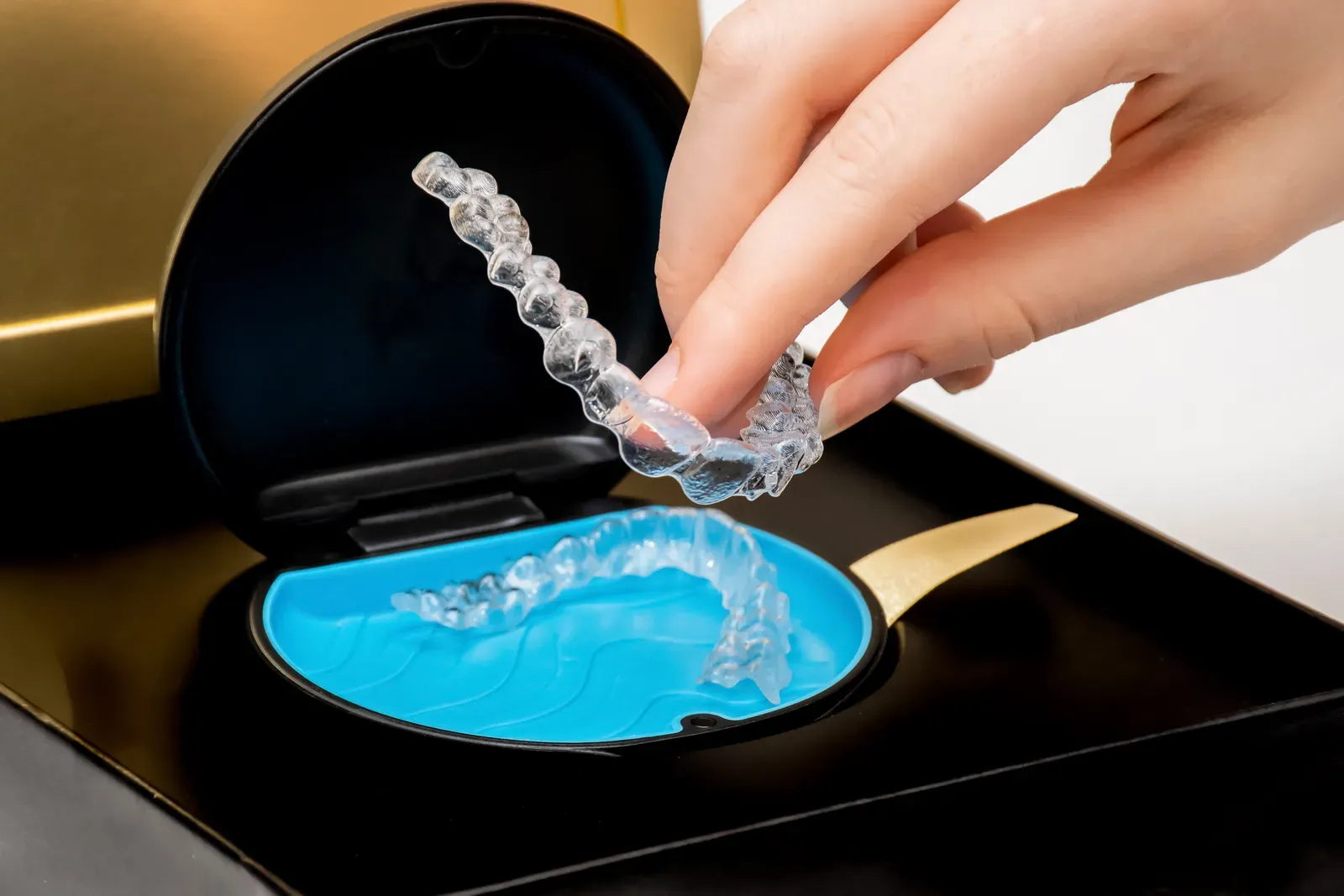
A crowded, gapped, or uneven smile affects more than appearance. Misaligned teeth make it harder to clean every surface thoroughly, which raises the risk of plaque buildup, gum irritation, and cavities in spots a toothbrush cannot easily reach. Bite misalignment can also place uneven pressure on certain teeth, contributing to chipping, wear, and jaw discomfort over time. Many adults and teens in Batavia come to us feeling self-conscious about how their smile looks in photos, during conversations, or at work, and that hesitation can quietly affect confidence day after day.
Invisalign addresses these concerns with a series of custom-fabricated, nearly invisible aligners that gradually shift teeth into a healthier, straighter position. Unlike traditional metal braces, Invisalign trays are removable for eating and cleaning, and they are virtually undetectable in everyday conversation. For patients who want straighter teeth without the look or lifestyle restrictions of brackets and wires, it is often the most practical path forward.
Our approach begins with a careful clinical evaluation of your bite, tooth position, and oral health before any aligner is designed. We use digital imaging to map out the full progression of your treatment from the first tray to the last, so you know what to expect before you commit. Our goal is a smile that is not only straighter but also functionally healthier and easier to maintain for years to come.
Alignment concerns show up differently from one patient to the next, and not every case requires the same level of correction. A short consultation can tell you exactly where you stand, but these are some of the most common reasons patients come in asking about clear aligners.
Even mild spacing or crowding issues are worth discussing early. A professional evaluation can catch bite problems before they progress into more involved enamel wear, gum recession, or jaw joint strain that would require more extensive treatment later.
Crooked or misaligned teeth are rarely the result of just one factor. Understanding what contributed to your bite pattern helps us plan an aligner sequence that addresses the issue at its source, not just the surface appearance.
Inherited jaw size and tooth proportions often determine whether there is enough room for teeth to erupt straight, which is why crowding tends to run in families.
Losing a baby tooth too early or an adult tooth without replacement allows neighboring teeth to drift into the open space, throwing off the whole arch.
Prolonged thumb sucking, pacifier use, or tongue thrusting during developmental years can gradually push teeth and the jaw out of their natural alignment.
Teeth continue to shift subtly throughout adulthood, even after braces, which is why many patients notice new crowding years after their teenage orthodontic treatment.
Chronic grinding places uneven pressure on specific teeth over time, gradually tilting or shifting them out of their original position.
Chronic mouth breathing, often from allergies or airway issues, can affect how the jaw develops and lead to a narrower palate and bite irregularities.
A facial injury that moves or loosens a tooth can leave it in a slightly altered position, which often influences the alignment of surrounding teeth.
Every Invisalign plan we build is based on your own teeth, your own bite, and your own timeline. Here is what the process looks like from start to finish.
We start by listening to your goals and concerns about your smile, then take a look at your current bite and tooth alignment to see if Invisalign is a good fit for your situation.
Digital scans, X-rays, and photographs capture precise measurements of your teeth and bite, giving us a full picture of your oral health before treatment begins.
Using your digital scan, we map out the full sequence of tooth movement and show you a projected preview of your smile at the end of treatment before any aligners are made.
You receive a series of custom trays to wear roughly 20 to 22 hours a day, switching to the next set in the sequence every one to two weeks as your teeth gradually shift.
Periodic check-ins let us confirm your teeth are tracking as planned and make small adjustments if needed, followed by a custom retainer once treatment is complete.
Invisalign treatment is designed to deliver results that hold up well beyond the final aligner tray, improving both how your smile looks and how your bite functions day to day.
Clear trays are hard to notice in everyday conversation, which makes treatment far more comfortable for patients who are self-conscious about visible metal brackets.
Because aligners are removable, you can brush and floss your natural teeth normally, reducing the cavity and gum inflammation risk common with fixed braces.
You simply remove your trays to eat, so there is no need to avoid popcorn, nuts, or chewy foods the way you would with traditional wires and brackets.
Smooth plastic trays eliminate the mouth sores and irritation that metal brackets and wires can cause against the inside of your cheeks and lips.
Correcting misaligned teeth reduces uneven pressure points, which can ease jaw strain and lower the risk of premature enamel wear over time.
Digital treatment planning lets you see a projected outcome before you start, so you know roughly what your smile will look like at the end of treatment.
Each Invisalign tray is designed to apply gentle, controlled pressure to specific teeth, nudging them a fraction of a millimeter toward their planned final position. As the ligaments holding a tooth in its socket respond to this steady pressure, bone gradually remodels around the root, allowing the tooth to shift safely without damaging the surrounding tissue. This is the same biological process that drives movement with traditional braces, just delivered through a series of custom plastic trays rather than fixed metal hardware.
Consistency matters enormously here. Because each tray is calculated to move teeth a very small, precise amount, skipping wear time or switching trays too early can throw off the sequence and slow your progress. That is why we ask patients to commit to wearing their aligners for roughly 20 to 22 hours per day, removing them only for eating, drinking anything besides water, and brushing.
Attachments, small tooth-colored shapes bonded to certain teeth, are sometimes added to give the aligner extra grip for more complex movements, such as rotating a tooth or closing a larger gap. These are removed once treatment finishes and do not affect the appearance of your smile during treatment in any noticeable way.
Good daily habits keep your treatment on schedule and protect your teeth while you wear your trays. These simple steps make a meaningful difference.
Keep aligners in for at least 20 hours a day to stay on track with your planned timeline and avoid delays in treatment.
Rinse and gently brush your aligners with a soft brush and lukewarm water to prevent buildup and odor.
Always take trays out before meals and snacks to avoid cracking plastic or trapping food particles against your teeth.
Brush and floss before placing trays back in so you are not sealing food debris or bacteria against your enamel.
Keep aligners in their case when not worn to avoid loss, warping, or accidental damage from pets or heat.
Attend scheduled check-ins so we can confirm your teeth are tracking correctly and catch any adjustments early.
These habits support a smooth treatment experience, but they do not replace the professional oversight needed to keep your aligner sequence moving correctly. Regular visits remain an essential part of the process.
"We take the time to explain every stage of your Invisalign plan before you commit, so you always know what to expect from your first scan to your final retainer fitting."
Answers to the questions our Batavia patients ask most often about Invisalign treatment.
Batavia Dental
Friendly, modern care for every member of your family - schedule your visit with Batavia Dental today.


 (630) 872-5369
